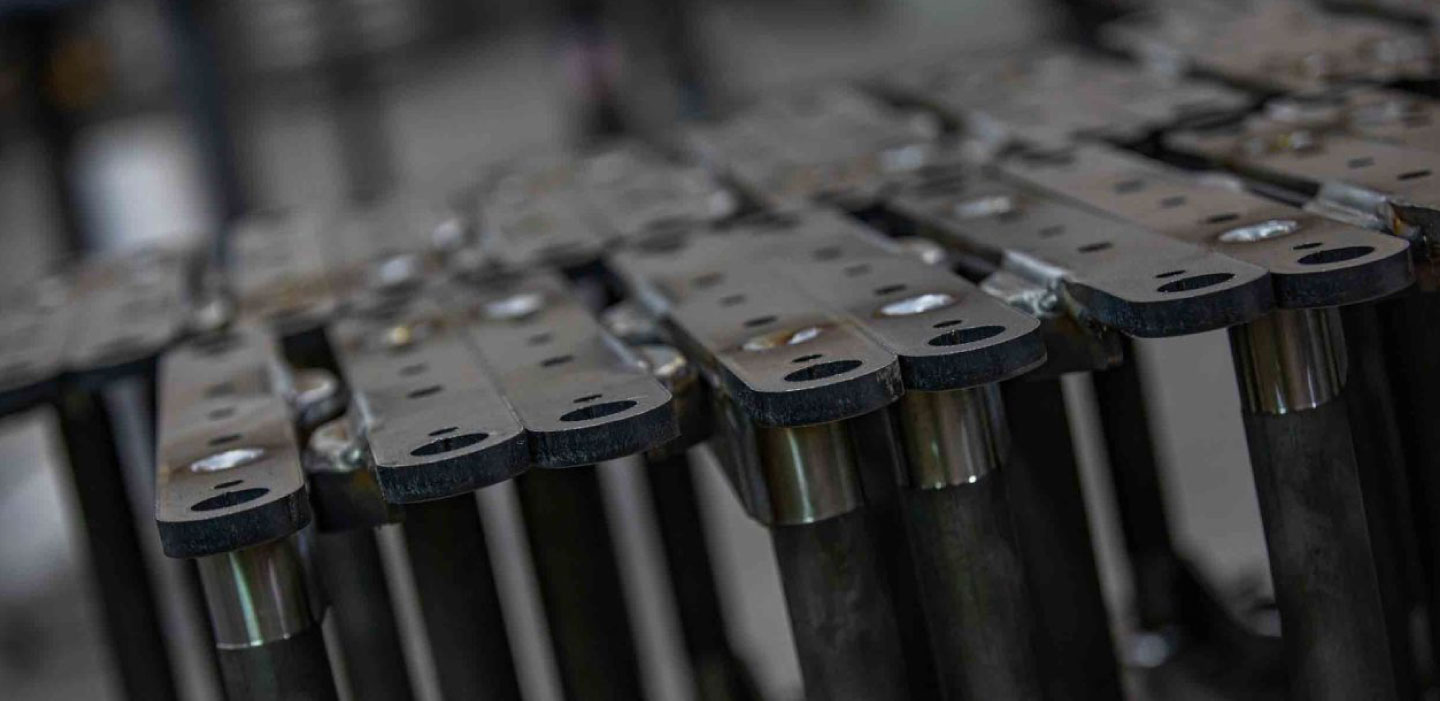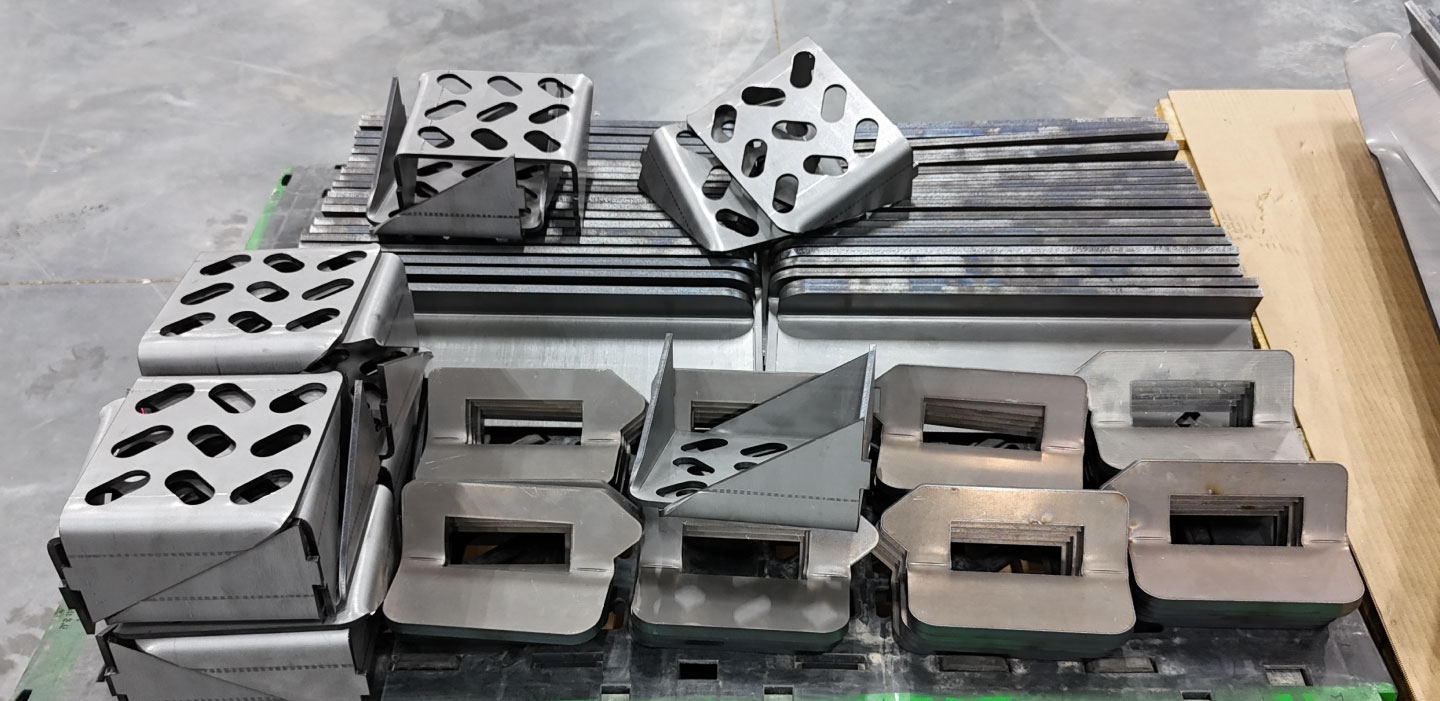
When engineers search for precision sheet metal cutting, they’re often looking for more than tight tolerances. They’re looking for a manufacturing partner that can produce thousands of simple parts consistently, deliver on schedule, and help eliminate production bottlenecks.
Simple parts are the backbone of countless products. Brackets, mounting plates, gussets, tabs, covers, and flat components may not be the most complex parts on an assembly, but they are often the highest-volume.
For manufacturers producing repeat orders, the challenge is finding a supplier that combines precision with speed and production capacity. That’s where the right laser cutting partner makes the difference.
Precision Sheet Metal Cutting Is About Repeatability
Precision sheet metal cutting is the process of producing flat metal components with accurate dimensions, clean edges, and consistent quality using advanced laser cutting technology.
While precision is important for every project, high-volume manufacturing introduces another requirement: repeatability.
Can the first part match the ten-thousandth?
Can every shipment meet the same specifications?
Can production continue without creating scheduling headaches?
For engineers and quality managers, repeatable manufacturing is often just as valuable as tight tolerances.
Not Every Sheet Metal Project Needs Complex Fabrication
Many manufacturing suppliers highlight their ability to produce highly engineered assemblies or intricate fabricated components, but often what’s just as important is finding a partner that specializes in precision sheet metal cutting for simple parts produced in larger quantities.
That focus allows production processes, equipment, and scheduling to be optimized for customers that need:
- Flat laser-cut components
- Simple formed parts
- Production quantities from hundreds to thousands of pieces
- Consistent repeat orders
- Reliable lead times
Instead of treating these jobs as small pieces of larger fabrication projects, look for a company that has built its operation around producing them efficiently.
Why Simple Parts Become Production Bottlenecks
Simple components are often ordered in the highest quantities.
Unfortunately, they’re also the parts that many fabrication shops prioritize behind more complex work.
As production schedules fill up, customers frequently experience:
- Long lead times
- Inconsistent delivery schedules
- Variable quality between production runs
- Capacity limitations during repeat orders
When these components support larger assemblies, even small delays can impact customer deliveries.
Choosing a manufacturer that is intentionally built for high-volume laser cutting helps reduce those risks.
What Engineers Should Look for in Precision Sheet Metal Cutting Services
Not every supplier offering laser cutting is equipped for repeat production. Here are several capabilities worth evaluating.
Modern Fiber Laser Equipment
Today’s fiber laser systems provide faster cutting speeds, improved dimensional accuracy, and excellent edge quality across a wide range of materials.
This translates into:
- Better repeatability
- Faster production
- Reduced secondary finishing
- More efficient manufacturing
Automated Production
Automation becomes increasingly valuable as production quantities grow.
Automated material handling and robotic bending improve consistency while allowing manufacturers to maintain throughput without sacrificing quality.
Robotic bending supports efficient production after laser cutting, helping customers receive finished parts faster.
Manufacturing Capacity
Production capacity matters just as much as machine capability. Reliable capacity helps prevent disruptions as production requirements increase.
Ask prospective suppliers:
- Can they support recurring production?
- Can they scale with demand?
- Can they maintain consistent lead times?
Designing Simple Parts for Better Manufacturing
Even relatively simple parts benefit from thoughtful engineering. Design choices can improve manufacturability while reducing production costs.
Engineers should consider:
- Standard bend radii
- Efficient hole placement
- Material selection
- Feature spacing
- Nesting efficiency
Small adjustments often allow manufacturers to increase material utilization while improving production speed. Early collaboration with a laser cutting partner can identify these opportunities before production begins.
Why Engineers Choose Specialized Laser Cutting Partners
General fabrication shops often balance a wide variety of projects, from prototypes to large welded assemblies.
A manufacturer that specializes in simple laser-cut parts brings a different advantage.
Specialization helps deliver:
- Faster production cycles
- Greater scheduling flexibility
- Consistent repeat quality
- Efficient processing for larger quantities
- Streamlined manufacturing workflows
For companies ordering the same parts repeatedly, those advantages can have a measurable impact on production efficiency over time.
Precision Sheet Metal Cutting Starts with the Right Manufacturing Partner
The best precision sheet metal cutting supplier isn’t necessarily the one with the most manufacturing capabilities. It’s the one whose capabilities align with your production needs.
If your project involves simple sheet metal components produced in medium- to high-volume quantities, working with a manufacturer that specializes in those parts can improve quality, shorten lead times, and simplify your supply chain.
At SteinerZ, 95% of laser cutting and bending orders ship within two weeks, helping customers maintain inventory levels and production schedules.
Contact SteinerZ today to discuss your project or request a quote for your next high-volume production run.