A metal part that works at 50 pieces still has to work at 500, 5,000, or across multiple scheduled production releases. As quantities increase, seemingly minor manufacturing variables can have a greater impact on quality, cost, throughput, and delivery performance.
That makes high-volume metal fabrication a production planning challenge as much as a manufacturing one.
For engineers and quality managers sourcing relatively simple sheet and plate components, choosing the right process and supplier can help maintain consistent results as production increases.
What Changes With High-Volume Metal Fabrication?
Higher quantities put greater emphasis on repeatability.
During a small production run, a manufacturer may be able to accommodate inefficiencies that become expensive when multiplied across thousands of components. Excess cutting time, inefficient nesting, unnecessary secondary operations, and overly restrictive tolerances can all affect the economics of a larger program.
Successful high volume production requires manufacturers to consider:
- Cycle and cutting times
- Material utilization
- Part nesting
- Repeatable tolerances
- Inspection requirements
- Secondary operations
- Production capacity
- Material availability
- Scheduling and repeat releases
These factors are interconnected. A small improvement in material yield, for example, can become significant when repeated across hundreds of sheets.
The objective is to establish a process that can produce the required component consistently and efficiently throughout the life of the program.
Why Laser Cutting Works for Repeat Production
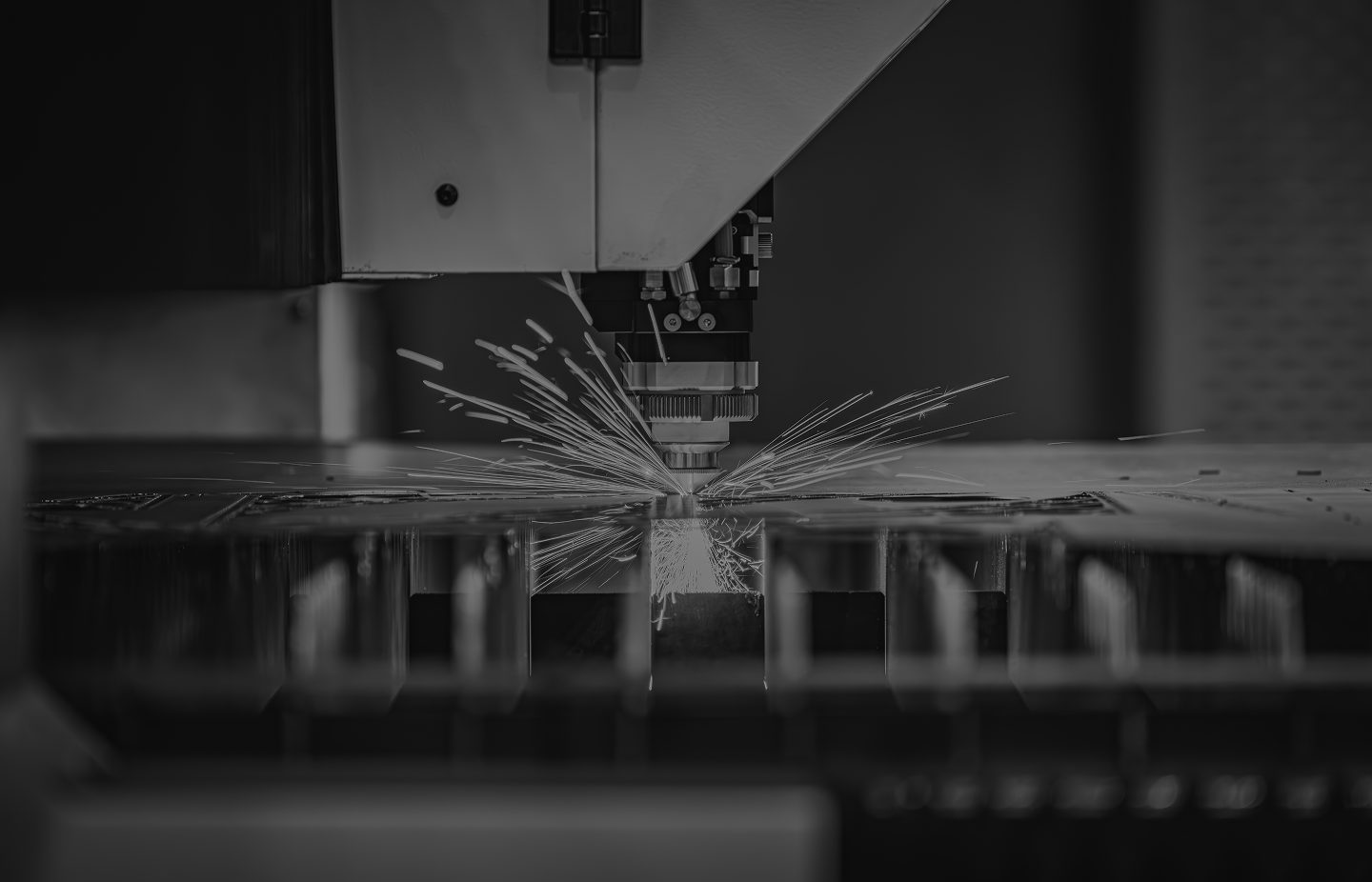
For many straightforward flat metal components, CNC laser cutting offers characteristics that translate well to higher-volume manufacturing.
Because the cutting path is CNC controlled, the process provides repeatable geometry across production runs. Laser cutting also eliminates the need for dedicated hard tooling for many parts, which can reduce upfront costs and simplify future engineering changes.
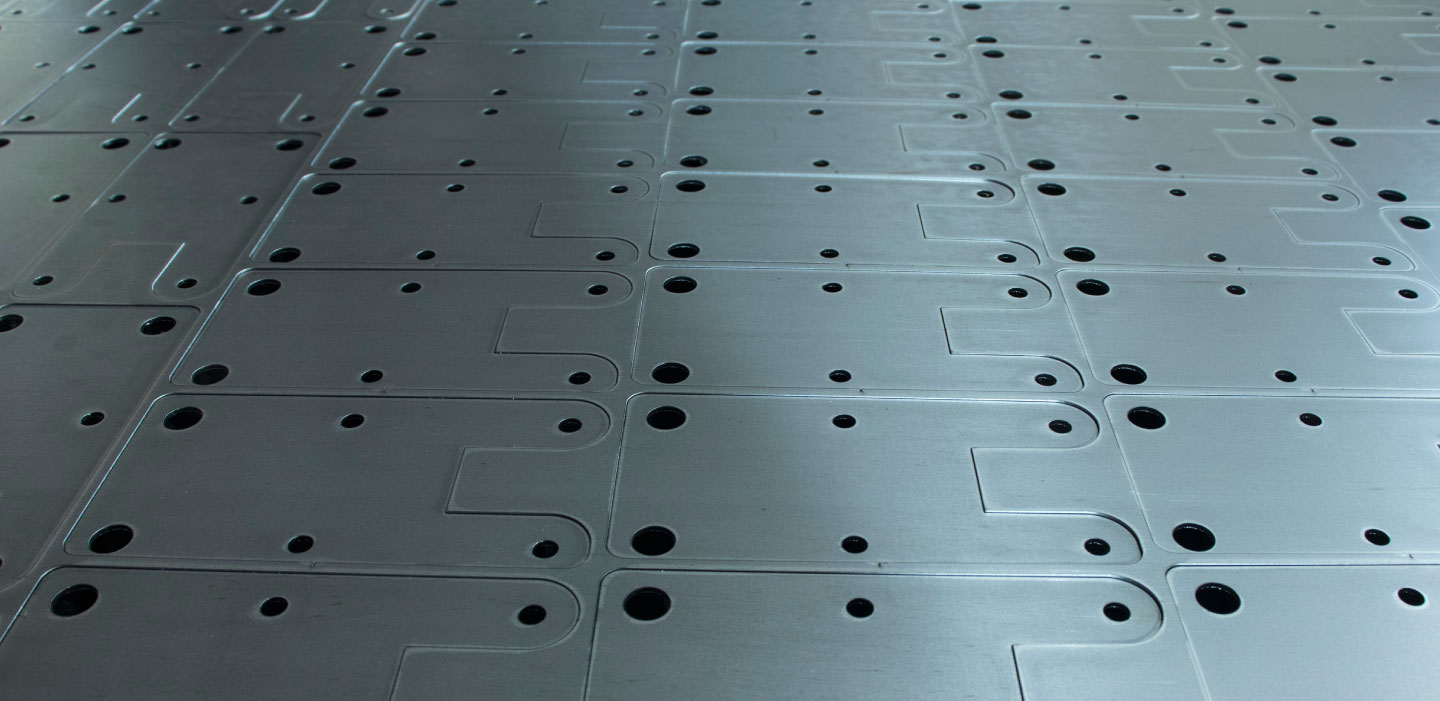
Optimized nesting can further improve material utilization by arranging components efficiently across a sheet. This becomes increasingly important as quantities rise because raw material represents a significant portion of total part cost.
Clean cuts and minimal burr formation can also reduce the amount of secondary finishing required. Fewer operations mean fewer opportunities to introduce variation while helping parts move through production more efficiently.
Design for the Production Quantity
A drawing should communicate functional requirements clearly, but engineers should also consider how those requirements affect production efficiency.
A tighter tolerance generally requires greater process control. When that tolerance is functionally necessary, the additional control is justified. Applying the same tight requirement to every feature can add unnecessary complexity to high-volume production.
Different features can behave differently during cutting.
External profiles tend to provide stable cutting conditions, while small holes and intricate internal geometries can introduce additional variables.
Reviewing tolerances according to fit, alignment, load transfer, and assembly requirements allows engineers to concentrate control on critical dimensions.
Material Utilization Becomes a Bigger Cost Driver
Material efficiency matters at any quantity. At higher volumes, it can have a much greater impact on overall program cost.
Suppose a part geometry allows only a few components to fit on each sheet because of its dimensions or orientation. A small design modification could potentially improve nesting and increase the number of parts produced from the same amount of material.
That difference becomes valuable across a large production run.
Engineers should work with their fabricator to identify opportunities to improve nesting without compromising part performance. Standardizing material grades and thicknesses where appropriate may also simplify sourcing and inventory management.
For high-volume requirements, buyers should ask prospective laser cutting manufacturers about stocked materials, sourcing capabilities, material certifications, nesting practices, and their ability to maintain material availability for repeat orders.
Quality Has to Remain Consistent Across Every Release
A successful first production run is only one quality milestone. High volume metal fabrication requires consistency from the first component through the last, including parts manufactured months later.
Quality managers should evaluate how a supplier controls its manufacturing processes and verifies production.
Important considerations include:
- Documented inspection procedures
- First-article inspection capabilities
- Material traceability
- Revision control
- Process monitoring
- Repeatability across batches
- Corrective action procedures
A documented quality management system can provide additional confidence that these controls are applied consistently.
Production planning should also establish which characteristics require inspection and at what frequency. Matching inspection requirements to actual part risk helps maintain quality without creating unnecessary bottlenecks.
Capacity Matters as Much as Machine Capability
A laser may be technically capable of producing a component, but that does not necessarily mean the shop has sufficient capacity to support the program.
Engineers and sourcing teams should evaluate the entire production environment.
Ask how many machines are available, what redundancy exists if equipment goes down, how the supplier schedules repeat production, and whether additional capacity is available if demand increases.
This is especially important for OEMs expecting quantities to grow. A supplier capable of handling today’s order should also have a plan for accommodating tomorrow’s forecast without sacrificing quality or delivery performance.
Simplify the Supply Chain Where It Makes Sense
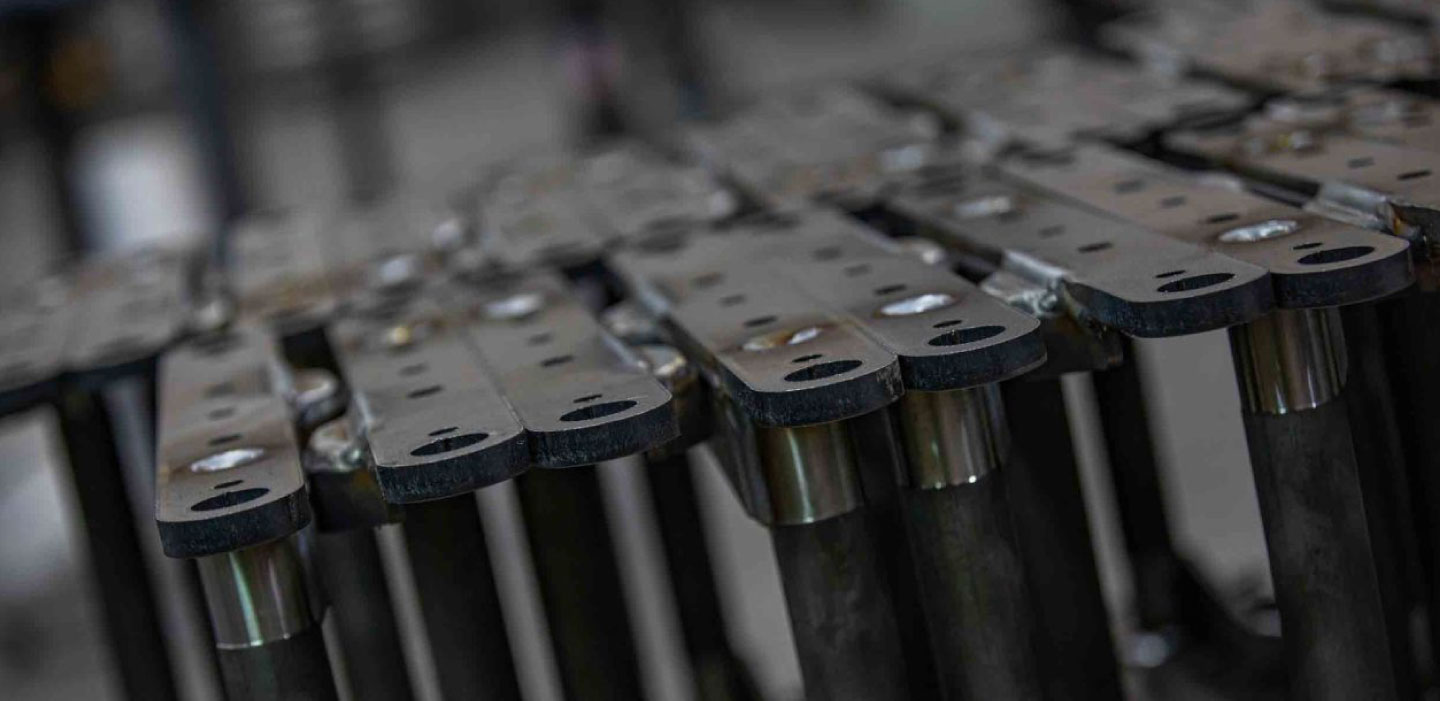
Some laser-cut parts are complete after cutting and deburring. Others require forming, welding, machining, coating, or assembly.
When secondary operations are necessary, consolidating compatible processes with one fabrication supplier can reduce transportation, handoffs, scheduling complexity, and quality coordination.
For example, CNC forming provides repeatability across larger production runs for brackets, enclosures, frames, panels, and other formed components. Integrating CNC bending and forming with laser cutting can create a more streamlined production flow for parts requiring both operations.
Engineers should evaluate this opportunity on a part-by-part basis. For straightforward flat components, keeping the process simple may remain the most efficient approach.
Scale Your Production Parts With SteinerZ
SteinerZ provides laser cutting and metal fabrication services for production requirements ranging from straightforward laser-cut components to parts requiring additional fabrication.
Its laser cutting capabilities support tolerances of ±.005″ on standard materials, with typical production lead times around two weeks. SteinerZ also operates more than 20 machines and maintains an ISO 9001:2015 certified quality management system.
If you have a simple laser-cut part with larger or recurring production requirements, contact SteinerZ to discuss quantities, material specifications, tolerances, and production needs.