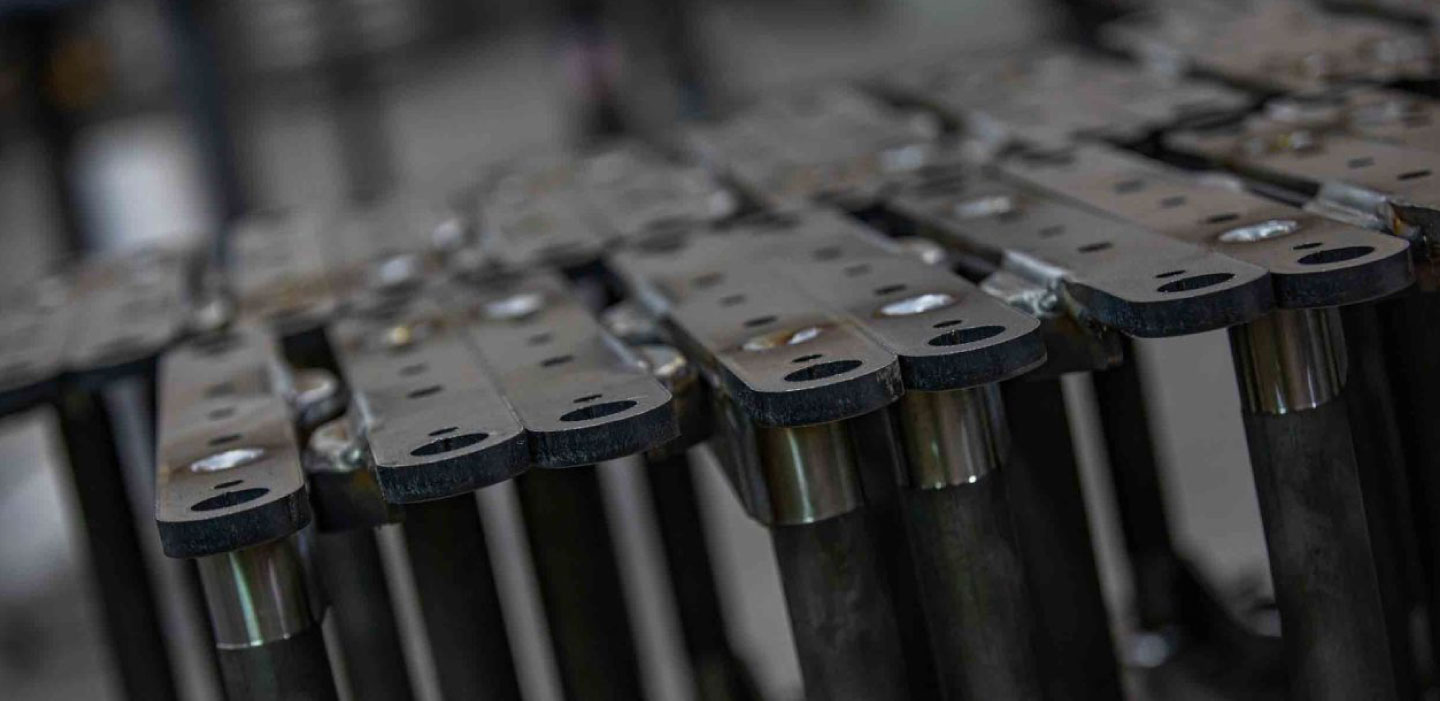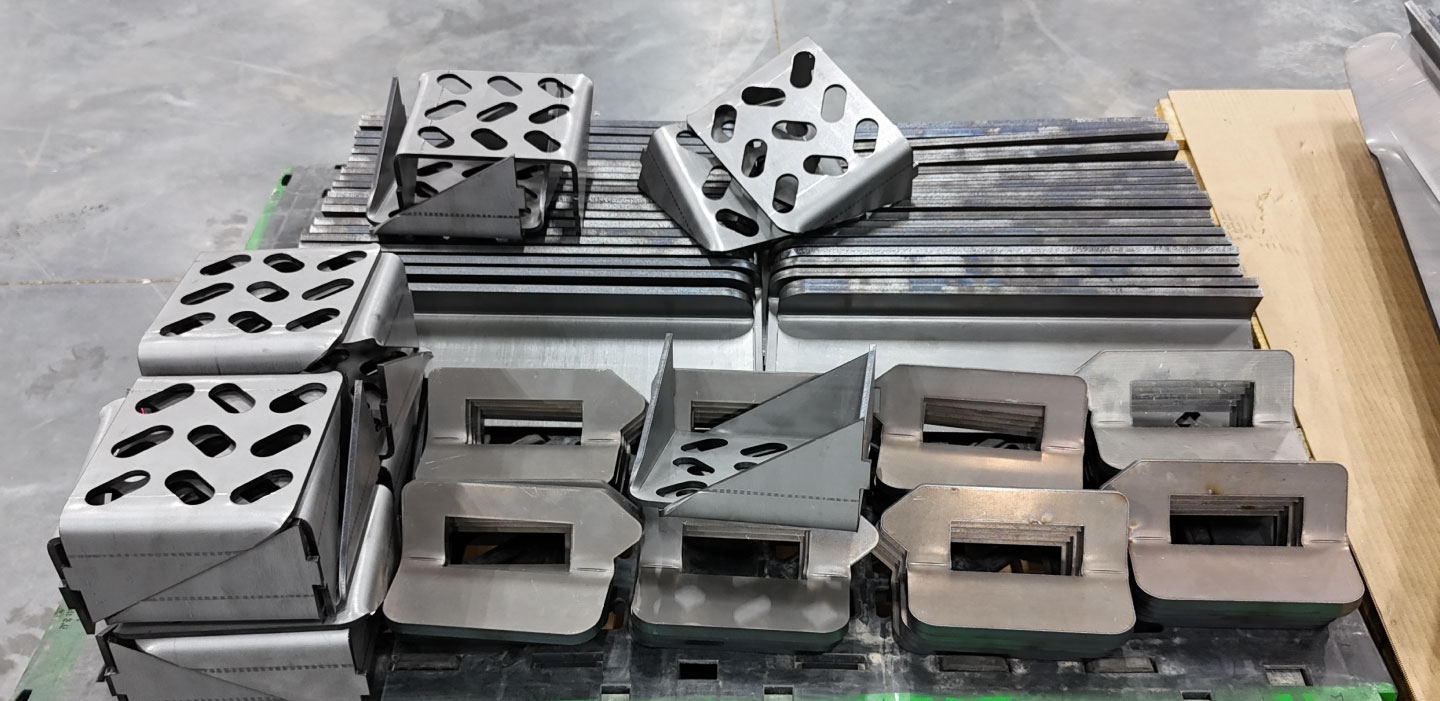
When an assembly moves from prototype into full production, the manufacturing strategy often changes just as much as the part itself. Processes that work well for dozens of components may struggle to support thousands or tens of thousands of identical parts while maintaining consistent quality, predictable lead times, and competitive pricing.
For simple laser-cut components, high-volume manufacturing requires more than fast cutting speeds. It depends on process stability, production planning, material flow, automation, and inspection systems that keep every part within specification from the first sheet to the last.
What Defines High-Volume Manufacturing?
High-volume manufacturing refers to producing large quantities of identical parts using repeatable, standardized processes that maximize efficiency while maintaining consistent quality.
Although production volumes vary by industry, high-volume laser cutting often involves:
- Thousands to hundreds of thousands of identical parts
- Scheduled repeat production runs
- Standardized tooling and work instructions
- Automated material handling
- Consistent inspection procedures
- Predictable lead times
Simple laser-cut components are particularly well suited for high-volume production because they require minimal setup changes and can often be nested efficiently across full sheets of material.
When paired with automated bending or secondary operations, manufacturers can produce finished components with very little variation between production runs.
Why Simple Parts Benefit the Most
Some of the highest-volume fabricated components are also among the simplest.
Examples include:
- Equipment brackets
- Mounting plates
- Electrical panels
- Reinforcement plates
- Flat spacers
- Machine guards
- Structural tabs
- Base plates
- Cover panels
Because these parts typically have straightforward geometries, production efficiency depends less on programming complexity and more on optimizing every step of the manufacturing process.
For example, manufacturers can improve throughput by:
- Optimizing nesting layouts to maximize sheet utilization
- Standardizing material sizes
- Reducing unnecessary machine changeovers
- Automating loading and unloading
- Sequencing bending operations efficiently
- Minimizing manual handling between operations
Each improvement may save only a few seconds per part, but across tens of thousands of components, those savings become significant.
Material Utilization Drives Production Efficiency
Material often represents one of the largest costs in fabricated components.
Efficient nesting software places parts across each sheet to maximize material usage while maintaining proper spacing for cutting accuracy and heat management.
High-volume manufacturers continually optimize nesting strategies based on:
- Material thickness
- Part orientation
- Grain direction when required
- Cut sequencing
- Skeleton stability
- Common-line cutting opportunities
Reducing scrap by even a few percentage points can create substantial cost savings across large production programs.
Manufacturers experienced with repeat production frequently refine nesting programs over time as production data identifies additional opportunities for efficiency.
Automation Improves Consistency
Consistency becomes increasingly important as production quantities grow.
Manual handling introduces opportunities for variation between operators, shifts, and production days.
Automation helps reduce those variables through:
- Automated sheet loading
- Lights-out laser cutting
- Robotic part handling
- Automated press brake operations
- Digital work instructions
- Standardized inspection processes
Rather than relying on individual operator techniques, automated systems repeat the same process every cycle.
For high-volume programs, this consistency improves dimensional repeatability while helping manufacturers maintain aggressive production schedules.
Bending Efficiency Matters as Much as Cutting
Many laser-cut components require one or more bends before shipment.
In these cases, press brake capacity can become the production bottleneck rather than laser cutting.
Manufacturers that invest in robotic bending systems can significantly increase throughput while maintaining consistent bend angles across long production runs.
Automated bending also reduces setup time between repeat jobs and minimizes operator variability.
If your components include multiple bends or require recurring production, it’s worth evaluating whether your fabrication partner offers automated forming capabilities alongside laser cutting.
Process Control Becomes More Important at Scale
Producing one good part demonstrates machine capability.
Producing 50,000 identical parts demonstrates process capability.
Successful high-volume manufacturing depends on standardized production systems that control variation throughout the entire workflow.
This includes:
- Material verification
- Program revision control
- First article inspections
- In-process quality checks
- Machine calibration
- Production documentation
- Final inspection procedures
Even minor inconsistencies can become expensive when multiplied across large production quantities.
Strong process controls help identify issues early before they affect thousands of finished components.
Lead Time Depends on Capacity, Not Just Speed
One common misconception is that faster lasers automatically produce shorter lead times.
While machine speed certainly matters, production capacity depends on much more than cutting performance.
Lead times are influenced by:
- Available machine capacity
- Material inventory
- Production scheduling
- Bending capacity
- Secondary operations
- Inspection resources
- Packaging and shipping processes
A fabrication partner with integrated production planning and automated equipment is often better positioned to support ongoing production schedules than one relying solely on machine speed.
For OEMs managing recurring production, predictable delivery is frequently more valuable than the fastest possible individual production run.
Questions to Ask a High-Volume Fabrication Partner
If you’re evaluating suppliers for repeat production, consider asking questions beyond basic pricing.
Some useful topics include:
- What production volumes do you routinely support?
- How is repeat quality verified?
- What automation is used during production?
- How are engineering revisions managed?
- Can production schedules accommodate recurring releases?
- What secondary operations are performed in-house?
- How are lead times maintained during demand increases?
- What quality documentation is available?
These conversations often reveal whether a supplier is structured for sustained production rather than occasional fabrication work.
Partner with a Manufacturer Built for Repeat Production
High-volume manufacturing is ultimately about repeatability.
Simple laser-cut parts may appear straightforward, but producing thousands of identical components requires disciplined processes, automation, efficient material utilization, and coordinated production planning.
If you’re planning a high-volume production program for laser-cut parts, contact SteinerZ to discuss your project and request a quote.