For engineers and fabrication buyers, sourcing manufactured components has become increasingly complex. Tight production schedules, labor shortages, supply chain disruptions, and rising material costs have forced manufacturers to rethink how they select production partners.
The challenge is no longer finding a supplier that can simply perform one manufacturing process well. Today’s OEMs and industrial manufacturers need partners capable of supporting multiple stages of production while maintaining quality, consistency, and responsiveness.
That’s where machining and fabrication come together.
When these capabilities are integrated effectively, manufacturers can reduce project risk, improve production efficiency, and simplify supply chain management. More importantly, they gain access to engineering expertise that helps optimize parts before they ever reach the production floor.
H2: Understanding the Relationship Between Machining and Fabrication
Although often grouped together, machining and fabrication serve different purposes in the manufacturing process.
H3 Fabrication
focuses on transforming raw metal into usable components through processes such as:
- Laser cutting
- Forming and bending
- Welding
- Assembly
H3 Machining
focuses on removing material to achieve precise dimensions, tolerances, and surface finishes through operations such as:
- CNC milling
- CNC turning
- Drilling
- Tapping
- Boring
In many applications, fabrication creates the structural foundation of a component while machining delivers the precision features required for functionality and final assembly.
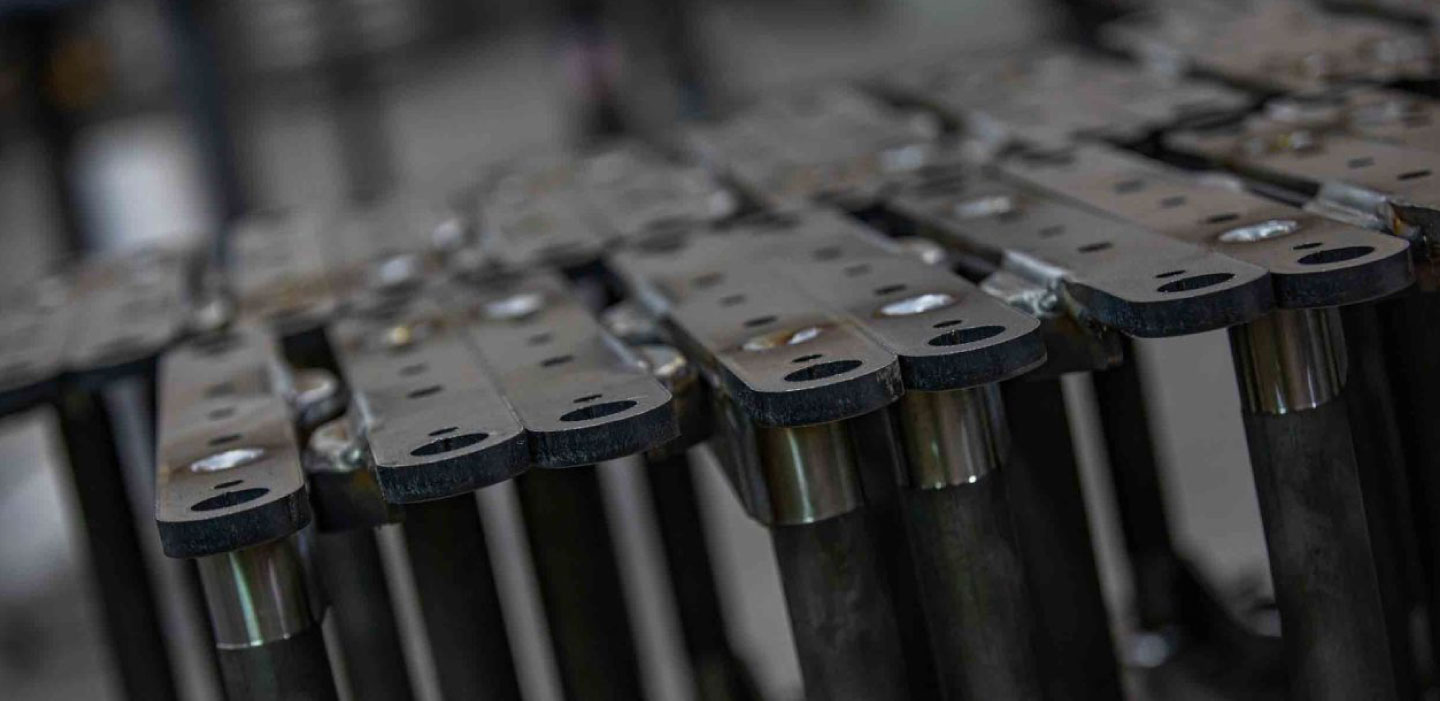
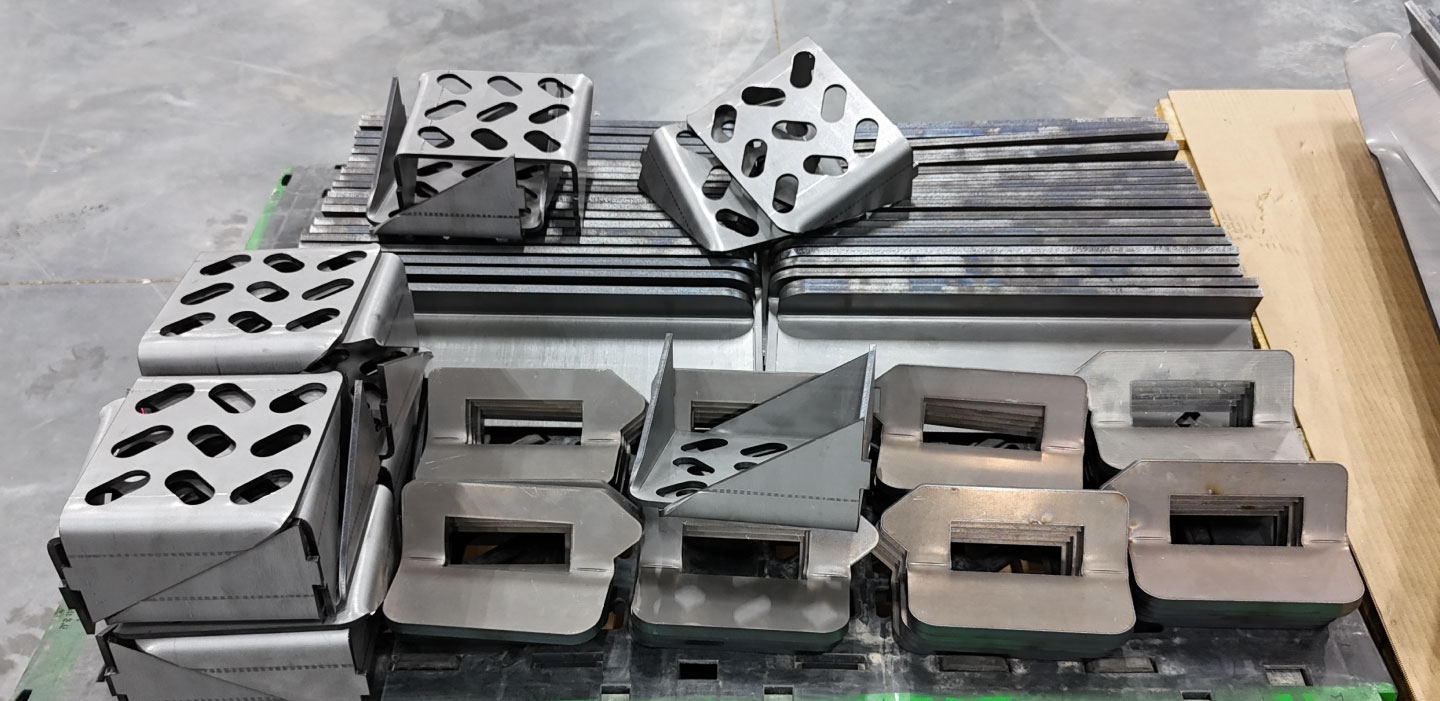
For example, a laser-cut and formed bracket may require machined holes, threaded features, or precision surfaces before it can be integrated into a larger assembly.
The ability to manage both processes efficiently can have a significant impact on project outcomes.
H2 Why Integrated Manufacturing Is Becoming a Competitive Advantage
According to Deloitte’s 2025 Manufacturing Industry Outlook, manufacturers continue investing in operational efficiency, automation, and supply chain resilience as competitive pressures increase across the industry.
At the same time, customers expect shorter lead times, higher quality standards, and greater production flexibility.
These expectations have driven many manufacturers to consolidate suppliers whenever possible.
Instead of coordinating multiple vendors for fabrication, machining, and finishing operations, buyers increasingly prefer manufacturing partners capable of supporting multiple processes internally.
| H3 Traditional Multi-Vendor Model | H3 Integrated Manufacturing Partner |
| Multiple supplier relationships | Single point of accountability |
| Additional shipping between vendors | Reduced transportation costs |
| Increased communication complexity | Improved project visibility |
| Longer production timelines | Faster turnaround times |
| Greater risk of dimensional variation | Improved quality consistency |
For engineers, this often means fewer design challenges and improved manufacturability.
For buyers, it means lower administrative burden and greater confidence in delivery performance.
H2 Laser Cutting Over Other Forms of Sheet Metal Cutting
Many fabrication projects begin with precision-cut sheet metal components.
Modern laser cutting services allow manufacturers to produce highly accurate parts with exceptional repeatability and minimal material waste.
Compared to traditional cutting methods, laser cutting offers several advantages:
- Faster setup times
- Improved edge quality
- Tighter tolerances
- Greater design flexibility
- Reduced secondary processing
For engineers, laser cutting provides greater freedom when designing complex geometries, cutouts, slots, and intricate part features.
For buyers, it contributes to more consistent quality and lower overall production costs.
As product designs continue to become more sophisticated, precision laser cutting remains one of the most valuable tools in modern fabrication.
H2 Where CNC Machining Adds Value
While fabrication processes create the overall structure of a component, many projects require a higher level of precision than fabrication alone can achieve.
This is where CNC machining services become essential.
Machining operations allow manufacturers to achieve:
- Tight dimensional tolerances
- Precision hole locations
- Threaded features
- Critical mating surfaces
- Enhanced surface finishes
Industries such as agriculture, industrial equipment, power generation, and heavy manufacturing often rely on machined features to ensure proper fit, function, and performance.
When machining capabilities are closely aligned with fabrication operations, manufacturers can reduce production delays while maintaining greater control over quality.
This becomes especially important for projects involving complex assemblies or critical performance requirements.
H2 The Critical Role of CNC Forming and Bending
Once a flat sheet metal component has been laser cut, it often requires forming to achieve its final shape.
Modern CNC forming and bending services allow manufacturers to transform flat parts into highly functional components while maintaining dimensional consistency.
Common applications include:
- Brackets
- Enclosures
- Structural supports
- Equipment housings
- Custom fabricated assemblies
Advanced CNC forming technology provides several benefits:
- Consistent bend angles
- Improved repeatability
- Reduced material distortion
- Faster production cycles
- Enhanced assembly fit-up
For engineers, precise forming helps ensure that designs perform as intended.
For fabrication buyers, it reduces the likelihood of costly downstream adjustments during assembly and installation.
H2 Design for Manufacturability Starts Before Production
One of the most overlooked opportunities in machining and fabrication occurs during the design phase.
Design for Manufacturability (DFM) focuses on optimizing parts before production begins to improve efficiency, quality, and cost performance.
Experienced manufacturing partners often provide valuable feedback regarding:
- Material selection
- Feature placement
- Tolerance requirements
- Bend allowances
- Machining accessibility
- Production sequencing
These recommendations can help eliminate unnecessary complexity while maintaining product performance.
In many cases, small design adjustments identified early can generate significant savings throughout the life of a project.
H2 What Engineers and Buyers Should Look for in a Manufacturing Partner
Not all fabrication providers offer the same level of capability or support.
When evaluating machining and fabrication partners, several factors should be considered:
H3 Technical Expertise
Can the supplier provide engineering support and manufacturability recommendations?
H3 Process Integration
Do they offer laser cutting, machining, and forming capabilities that work together efficiently?
H3 Quality Systems
Are documented quality procedures in place to ensure consistency?
H3 Capacity and Scalability
Can they support both prototype projects and production-volume requirements?
H3 Communication
Will project updates, scheduling information, and technical feedback be provided proactively?
The answers to these questions often have a greater impact on project success than price alone.
H2 The Needed Combination of Machining and Fabrication
Manufacturing continues to move toward greater automation, precision, and process integration.
As engineers develop increasingly sophisticated products and buyers seek more resilient supply chains, the value of integrated machining and fabrication services will continue to grow.
Organizations that combine advanced laser cutting, CNC machining, and precision forming capabilities are better positioned to support evolving customer requirements while maintaining quality and efficiency.
For manufacturers looking to improve lead times, reduce production risk, and simplify sourcing, choosing a partner with broad technical capabilities can provide a meaningful competitive advantage.
SPECIAL NOTES
Primary Keyword
machining and fabrication
Secondary Keywords
- machining and fabrication services
- CNC machining services
- laser cutting services
- CNC forming and bending
- custom metal fabrication
- precision machining
- sheet metal fabrication
- manufacturing partner
Internal Links Embedded
- Laser Cutting Services
- CNC Machining Service
- CNC Bending & Forming Services
SEO Strategy
This version positions SteinerZ as an integrated manufacturing partner rather than focusing heavily on welding or assembly. The content naturally reinforces the relationship between laser cutting, CNC machining, and CNC forming—creating stronger topical relevance around the keyword cluster of machining and fabrication, while building authority around the specific service pages you want to strengthen.